The New 2026 Food Pyramid Explained: What It Means for Gut Health
A New 2026 Food Pyramid might look like a simple graphic, but it carries a big message, one that influences school lunches, public health programs, and how millions of people decide what they “should” eat.
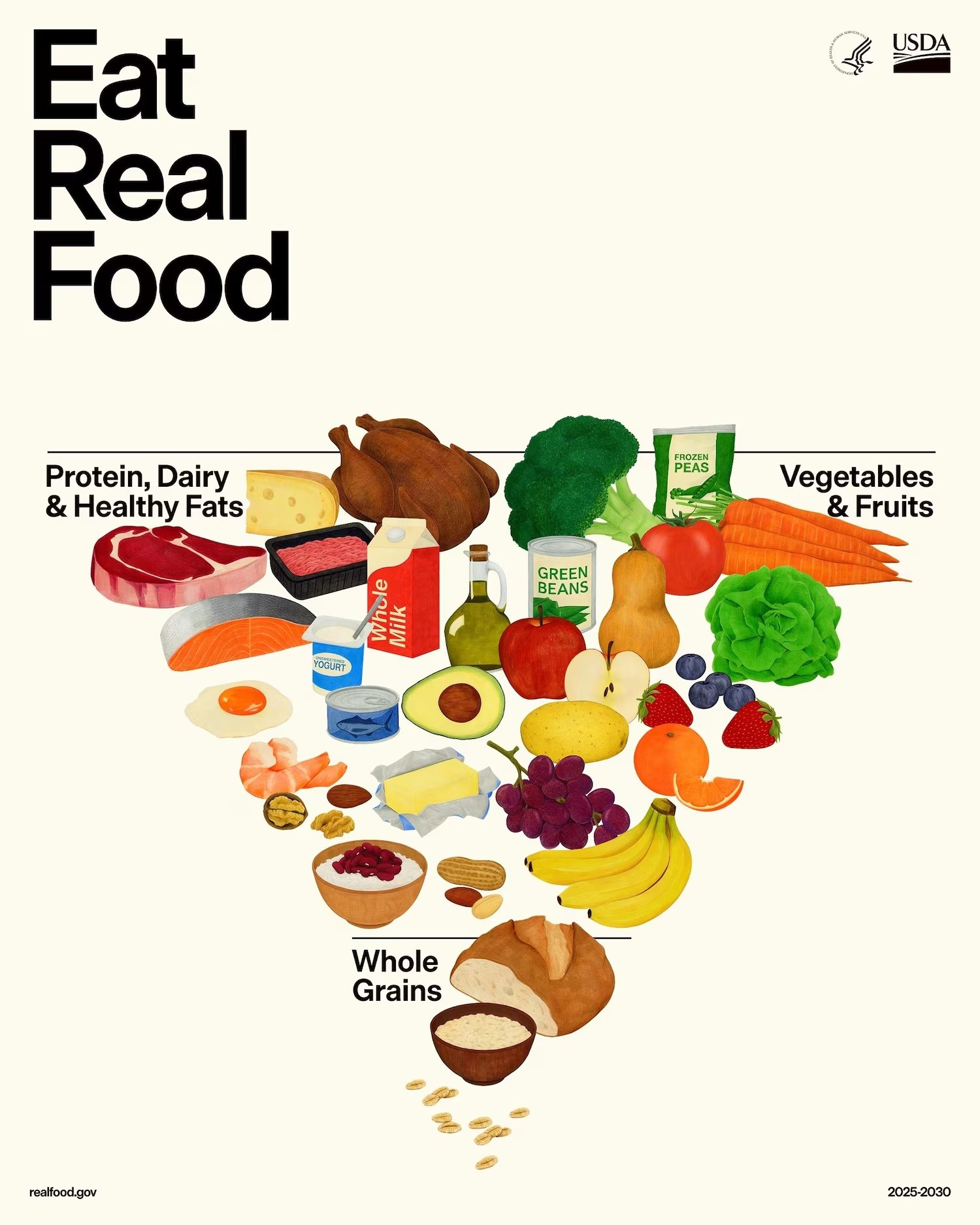
On January 7, 2026, USDA and HHS released the 2025–2030 Dietary Guidelines for Americans along with a new “upside-down” pyramid-style visual. The intention is clarity, but nutrition rarely fits neatly into a single picture, especially when one graphic is expected to apply to different bodies, lifestyles, and health needs.
Some updates are genuinely helpful, but the message can be oversimplified or taken too far, and parts are being debated for valid reasons, especially for guidance around fiber intake, microbiome diversity, and why “eating healthier” can sometimes make some people feel worse before they feel better.
So let’s break down what changed, what’s useful, what’s controversial, and how to apply the guidance in a balanced way that supports your digestion and your long-term health without falling into extremes.
Why the New 2026 Food Pyramid Matters Clinically for Gut Health
The Clinical Upside
Shifting toward minimally processed foods can improve fullness, cravings, and energy, especially for people whose baseline diet relies on packaged grab-and-go foods high in refined starches and ultra-processed ingredients, which also tend to lower overall vitamin, mineral, and phytonutrient intake.
Two Biggest Traps
Where this can go sideways is in how the message gets interpreted. A stronger emphasis on protein and “real food” can be mistakenly translated into “carbs are bad,” which can lead to overly restrictive eating, reduced fiber intake, and sometimes worsened constipation or disrupted gut motility. The other common overcorrection is “more animal fat is always better,” which may be problematic for some individuals depending on lipid markers, cardiovascular risk, bile tolerance, and overall dietary pattern.
Gut-Support
From a 2026 Food Pyramid & gut health perspective, the goal is to use the new guidance as a structure not a strict rule. The most gut-supportive version keeps the core priorities intact: fiber adequacy (especially from vegetables, legumes, nuts/seeds, and tolerated whole grains), dietary diversity (a wider range of plant foods to support microbial variety), and personal tolerance, because the “healthiest” food on paper is not helpful if it triggers symptoms or becomes unsustainable.
Why the New 2026 Food Pyramid Is Controversial
1. The pyramid visual can be misleading
A pyramid naturally signals “eat more of what’s widest.” Critics argue the inverted design is confusing and doesn’t clearly communicate portions or priorities. Since most people follow the visual (not the full document), this can lead to overcorrection.
2. Saturated fat is the elephant in the room
Some messaging highlights full-fat dairy and animal fats like butter and beef tallow more prominently, even though the federal guidelines still state that saturated fat should not exceed 10% of total daily calories. At the same time, major cardiovascular organizations continue to caution that high-fat animal products including red meat, butter, lard, and tallow are linked with higher cardiovascular risk and recommend prioritizing plant proteins, seafood, and leaner options.
This creates a real clinical tension: “real food” isn’t automatically heart-protective in unlimited amounts. For some people, saturated fat may be relatively neutral short-term; for others, especially with elevated LDL, strong family history, or existing cardiovascular risk, it can be an important factor to adjust.
3) Fiber and gut health can feel under-emphasized
From a gut-focused clinical perspective, this is a key concern. Several dietitians and critics have pointed out that the new pyramid appears to elevate protein and fats more than fiber-rich foods like legumes and whole grains, even though most Americans already fall short on fiber, a core foundation for gut health.
If the 2026 food pyramid is interpreted as “more steak and cheese, fewer plants and grains,” it can lead to constipation, worsening bloating (from too little fiber or increasing fiber too fast), higher LDL in some people, and less microbial diversity with fewer short-chain fatty acids that support a calmer gut.
How To Use the New 2026 Food Pyramid For Gut Health
A practical way to use the 2026 Food Pyramid is to build a simple “Gut-First Plate” within it, so you get the benefits without the common pitfalls.
1) Protein: yes → but diversify it
Consistency matters, but so does variety. Rotate through:
- Fish/seafood
- Poultry
- Eggs
- Yogurt/kefir
- Tofu/tempeh
- Beans/lentils (as tolerated)
This keeps meals satisfying while broadening nutrient intake and supporting better long-term adherence.
2) Fiber is not optional for gut health
A common mistake is unintentionally cutting fiber when increasing protein. Aim for at least one fiber anchor per meal, such as:
- Vegetables
- Berries
- Beans/lentils
- Chia/flax
- Oats or tolerated whole grains
- Nuts/seeds
3) Choose fats that support inflammation balance
Prioritize fats that tend to support cardiometabolic and inflammatory balance:
- Olive oil
- Avocado
- Nuts and seeds
4) Don’t forget fermented foods
Fermented foods can support gut ecology when tolerated:
- Yogurt/kefir
- Sauerkraut
- Kimchi
- miso
Key Takeaways
The 2026 food pyramid is a helpful step toward real, minimally processed foods, but the risk is overcorrecting: cutting legumes, whole grains, and plant variety, or leaning too heavily on saturated-fat-heavy animal foods, which can mean too little fiber and too much saturated fat, affecting both heart markers and gut health.
The simplest way to stay balanced is to build meals around real food and keep fiber non-negotiable for gut health.
If this still feels confusing, don’t guess, book a free consultation with Next Generation Nutrition to translate the guidance into your symptoms, labs, cholesterol, blood sugar patterns, and food preferences, and leave with a plan for gut health, steady energy, and long-term results without diet noise.