Simple Meal Prepping for Busy Families
Simple meal prepping for busy families works best when you prep flexible ingredients rather than full recipes — cook one or two proteins, a grain, and some vegetables once a week, then mix and match throughout the week to create different meals without repetition or food boredom. The most sustainable method takes about 1–2 hours on one prep day and uses a 5-part meal formula: protein, non-starchy vegetables, a complex carb, a healthy fat, and a flavor factor (sauce, dressing, or spice blend). This approach dramatically cuts weeknight cooking time, reduces the pull toward takeout, and still works on low-energy days when cooking from scratch feels impossible.
Ever come home after a long day, open the fridge, and feel instantly overwhelmed? Everyone’s hungry, time is tight, and cooking feels like too much. That’s usually when takeout starts calling, snacks become dinner, and the “What’s for dinner?” question turns into stress.
Meal prepping is the simplest way to get ahead of that moment, but not in the way most people think. It doesn’t have to mean spending your entire Sunday cooking, filling the fridge with identical containers, or eating the same meal five days in a row. The most sustainable approach is much more flexible and realistic.
Let’s dive in and learn how to make meal prep simple and workable for real life: busy schedules, hungry families, changing plans, and those nights when cooking feels like too much.
What Is Meal Prepping?
Meal prepping is simply doing a little work ahead of time so weekday meals feel easier. It’s the habit of planning and prepping meals or just a few ingredients so you can save time, reduce stress, and make healthy eating more realistic when life gets busy.
And it doesn’t have to be all-or-nothing. Meal prepping can be as small as washing fruit and portioning snacks for the week, chopping veggies so dinner comes together faster, or cooking a couple proteins and a grain so you can mix and match quick meals all week long.
The goal isn’t a perfect fridge full of matching containers. The goal is balance: make the healthy choice the easy choice, even on the nights when you’re tired, everyone is hungry, and time is short.
Why Meal Prepping Helps Busy Families
Meal prepping works because it solves the everyday weeknight problems: not enough time, low energy, and too many last-minute decisions. When a few basics are ready to go, dinner gets faster and a whole lot less stressful.
- Saves time: less chopping, less cooking, fewer dishes
- Less takeout: when food is ready, it’s easier to choose it
- More balanced meals: protein, fiber, and healthy fats
- Better portions: fewer random snacks and “grazing dinners”
- Less waste, more savings: food gets used instead of forgotten
Most importantly, meal prepping cuts down on decision fatigue, because the hardest part of dinner is often figuring out what to make.
The Simple, Sustainable Method: Prep Ingredients, Not Recipes
One simple way to make meal prepping feel doable is to think less about full recipes and more about a few flexible building blocks. Instead of cooking five complete meals, prep a handful of versatile ingredients and store them separately. Then all week long, meals come together by mixing and matching → fast, flexible, and never boring.
To keep meals balanced without overthinking it, use this simple 5-part meal foundation:
- Protein: chicken, turkey, ground beef/turkey, eggs, beans, lentils, tofu, fish, Greek yogurt, cottage cheee
- Non-starchy veggies: leafy greens, broccoli, cauliflower, bell peppers, mushrooms, zucchini, carrots, cucumbers, tomatoes
- Starchy carbs: brown/wild rice, quinoa, buckwheat, oats, sweet potatoes, white/red potatoes, pasta (whole grain, lentil, chickpea)
- Healthy fat: olive oil, avocado, nuts/seeds, tahini, nut butters, ghee
- Flavor factor: salsa, pesto, hummus, herbs, spices, yogurt-based sauces, balsamic/apple cider vinegar, nutritional yeast, marinara sauce
When these pieces are ready, dinner doesn’t require a recipe: it’s more like assembly.
For example, prep chicken or tofu, quinoa, roasted veggies, and two sauces. One night it’s a warm bowl or salad. The next night it becomes a quick stir-fry. Another night it turns into wraps or tacos. Simply swapping the sauce, dressing, spices, or toppings gives it a whole new flavor without any extra cooking.
Same ingredients, totally different meal.
A Simple Weekly Meal Prepping Plan
If meal prepping has felt overwhelming in the past, this is the simplest way to start without trying to overhaul your whole week.
Step 1: Look at your week ahead
Ask:
- Which nights are busiest?
- When will leftovers help?
- Any meals out?
- How much time is realistic for cooking?
Step 2: Choose lunches and dinners
Start with staple proteins and build around them. Keep it simple: 2–3 proteins for the week is plenty.
Aim for meals that include:
- Protein
- Fiber-rich complex carbs i.e. veggies, legumes, whole grains
- Healthy fats
Step 3: Make breakfast easy and protein-forward
Choose 2–4 breakfasts and rotate them. Examples:
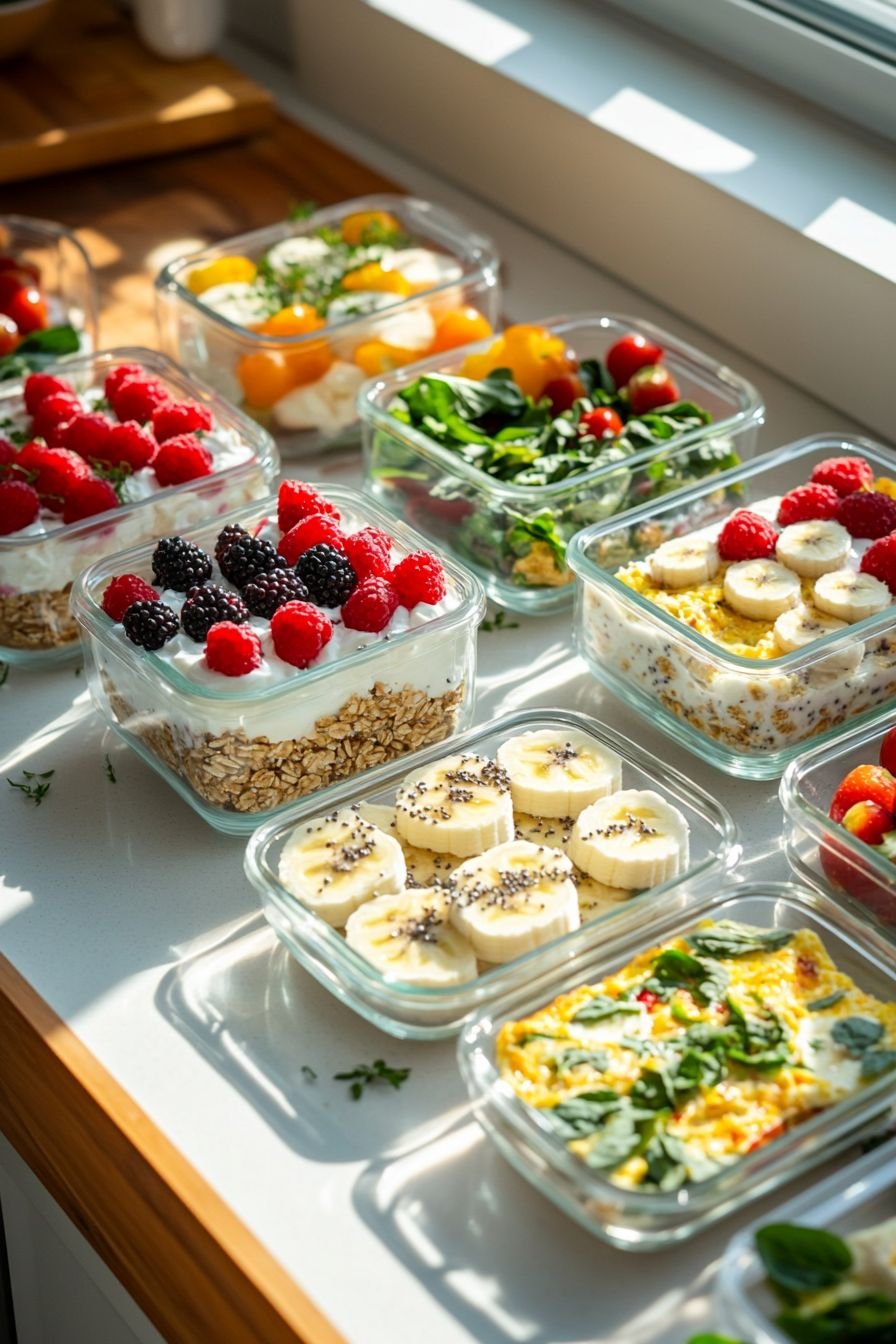
- Overnight oats + protein+ nuts/seeds
- Egg muffins + avocado
- Greek yogurt bowls (nuts/seeds, fruit, nut butters)
- Cottage cheese bowls (nuts/seeds, berries, nut butters)
Step 4: Create a loose weekly calendar
Not set in stone, just a plan that helps grocery shopping and reduces daily decisions. Theme nights can help:
- Taco Tuesday
- Soup & Salad Night
- Wrap Wednesday
- Mediterranean Monday
- Sheet-Pan Night
Key Takeaways
Meal prepping isn’t about being perfect, it’s about building a simple system that makes healthy meals easier on the days you’re busiest. When a few ingredients are prepped and ready to mix and match, dinner stops feeling like a daily crisis and starts feeling doable.
Start small this week:
- Prep one protein
- Cook one whole grain or starch
- Chop or roast a few veggies
- Add one “flavor factor” (a sauce, dressing, or seasoning blend)
That’s enough to create multiple meals with less stress, less takeout, and more consistency without spending hours in the kitchen or eating the same thing every day.
Ready to make meal prep easier? Book a free consultation with us at Next Generation Nutrition, and let’s build a simple, realistic plan that fits your schedule and your family so meal prepping feels doable and less stressful starting this week.
Jessica Mantell, CNS, LDN, MS.Ed
Certified Nutrition Specialist focused on gut health, hormones, and autoimmune conditions.